
Last week, I became a war tax resister. I’ve been thinking about this for a long time, and finally this spring my actions aligned with my intentions and I sent the following letter to the Internal Revenue Service:
Last week, I became a war tax resister. I’ve been thinking about this for a long time, and finally this spring my actions aligned with my intentions and I sent the following letter to the Internal Revenue Service:

This is the fourth and final installment from my thesis for the Upaya Buddhist Chaplaincy Program. In the first post, I covered the context and background of the Protest Chaplains as well as the Occupy Wall Street Movement. In the second post, I shared the findings from my interviews with four of the chaplains. In the third post, I explored five lessons distilled from studying the Protest Chaplains.
This last post is the conclusion to my thesis. Most of it is devoted to a long quote from one of the original Protest Chaplains, Marisa Egerstrom. I was so taken by her words that I felt it was important to give voice to the whole quote.

This is the third installment from my thesis for the Upaya Buddhist Chaplaincy Program. In the first post, I covered the context and background of the Protest Chaplains as well as the Occupy Wall Street Movement. In the second post, I shared the findings from interviews with some of the chaplains.
In this excerpt, I explore five lessons that I distilled from studying the Protest Chaplains.
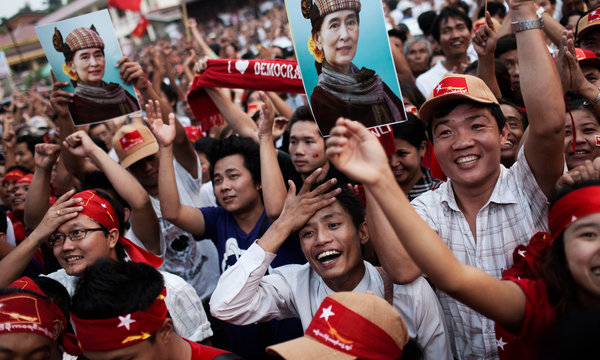
New York Times photo by Adam Ferguson
A brief interruption in our series on The Protest Chaplains to mark a milestone in Burma (Myanmar).
Today, April 1, Daw Aung San Suu Kyi and her party, the National League for Democracy, appears to have won a seat in Myanmar’s Parliament. This New York Times article does a good job of describing the elation that Suu Kyi’s supporters are feeling, and how this event may mark a turning point in that country’s long period of oppressive military rule.
There is a long way still to go, however. As this eyewitness account from Burma by Hozan Alan Senuake notes, many political prisoners continue to be held and the military junta is effectively holding on to power by keeping the vast majority of seats in Parliament for their cronies.
Even so, today’s election results seem to mark a significant shift, perhaps reflecting the pressure that the junta has felt internally and as well as from economic sanctions imposed by other countries.
As Alan writes at the end of his post:
The conversation [with the Burmese monk] was just beginning, but simply to meet and talk is a radical act. As I was paying my respects to the monks, preparing to leave, one said quietly: “In the last twenty years we didn’t have such opportunities. We couldn’t speak with foreigners.”
The opportunity for dialogue — all kinds of dialogue — is an encouraging sign. But it is not enough. Real change in Burma, or anywhere is a matter of access to resources, mutual accountability, and the power for people to determine the course of their own lives. When war has ended in Burma, when all the prisoners are free, when there are reasonable laws that apply to everyone — then we can start to celebrate. Not yet.
To learn more about how you can support the struggle for a truly free Burma, visit any of these links:

 The Jizo Chronicles