RSS Feed

Yearly Archives: 2010

Finalists Named for Blogisattva Awards

Posted on

The Blogisattva Awards are kind of like Christmas for us Buddhist bloggers. Originally started by Tom Armstrong, these awards have been given out over the past several years and have really helped to build a sense of  sangha among Buddhist bloggers, as well as brought more awareness of their work to the larger community.

I am honored and humbled to be included in the lists of finalists, a list that includes some of my favorite writers like Genju, James Ford, Marguerite Manteau-Rao, Nathan Thompson, and Marnie Louise Froberg. You can view the complete lists of nominees here. The “winners” will be named tomorrow, December 12, but in my book, they are all winners!

(To me, the one glaring omission was not including Katie Loncke’s excellent blog in the list — I hope that she will be recognized next year and in the meantime I encourage you to take a look at her writing, which is consistently thought-provoking and heartfelt.)

A very big thank you to the team that administered this year’s awards: Nate DeMontigny from Precious Metal, Kyle Lovett from The Reformed Buddhist, and Anoki Casey of Buddha Badges who will always be my favorite graphic designer.

Dharma in Action: Colombia

Posted on

Good to be in touch with all of you again following Rohatsu sesshin. It was a beautiful experience, capped off by the 70 of us who sat Rohatsu going outside early on the dawn of December 8 to watch the morning star rise over the mountains just outside of Santa Fe. What a moment!

Here’s an interesting announcement that recently came to my attention. In the coming year, the Buddhist Peace Fellowship is co-sponsoring a “Dharma in Action Fellowship” with the Fellowship of Reconciliation. From the BPF website:

The Buddhist Peace Fellowship is looking for a Buddhist activist to work for peace in Colombia through the Dharma in Action Fellowship (DIAF).  The DIAF Fellow will be placed with the Fellowship of Reconciliation’s peace team to provide nonviolent protective accompaniment to threatened peace activists in Colombia, while exploring the relationship between Buddhism and activism.

Applications are due January 3, 2011!

More details are available from BPF here.

___________________________________

If you enjoyed this post, I invite you to visit my other website: The Liberated Life Project — a personal transformation blog with a social conscience.

Going Into Rohatsu… Odds and Ends

Posted on

Starting tonight I’ll be sitting Rohatsu sesshin at Upaya Zen Center, so I’m going to pull myself away from the computer screen for the next eight days. I don’t know how I’ll manage it, but I’m sure that will be good for me. I’m remembering back to last year and how wonderful it was to unplug for a week… and I wrote about that experience here on The Jizo Chronicles.

Before I leave you for a week, a couple of things —

  • Congratulations to Renata Golden, who is the winner of the book Not Turning Away in the Great Jizo Book Giveaway. And thanks to all who left comments to enter. Maybe we’ll do this again with another book soon.
  • I just launched a new blog called The Liberated Life Project. It’s a sort of “stealth dharma” blog where I share insights and practices to help people live a more awakened life. I hope you’ll visit the site and share it with friends who you think might enjoy it.

Okay, that’s it… off to the cushion! May all of you have a peaceful week.


Video: Aung San Suu Kyi

Posted on

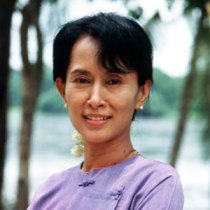
Daw Aung San Suu Kyi was named as a “Top Global Thinker of 2010” by Foreign Policy magazine. In this video, she speaks from her heart about what she sees is needed in the world right now…

Apologies — the video feed from this site is not working well, so here is the link to the page with the video:

http://www.foreignpolicy.com/articles/2010/11/29/Exclusive_Video_Message_from_Aung_San_Suu_Kyi

Holiday Shopping: Donkeys, Dharma, and more

Posted on

[Originally posted on The Jizo Chronicles last year, but this seems timely to share again.]

There are all kinds of ways to deal with the upcoming holiday shopping season. One is to buy nothing on the day known as “Black Friday,” an action pioneered by Adbusters. Gary Gach gives a  dharma perspective on “What Would Buddha Buy?” (the answer: not too much, not too little).

Another approach is to take part in the cycle of giving and receiving, but to do it in a way that may be of benefit to others. Generosity is, after all, one of the basic Buddhist virtues.

If living beings knew the fruit and final reward of generosity and the distribution of gifts, as I know them, then they would not eat their food without giving to others and sharing with others, even if it were their last morsel and mouthful.
~ Avadana Jataka

I am a big donkey lover. I’m not sure I can even tell you why, but I am. So, last holiday season, I was tickled pink when a friend of mine sent me a donkey as a gift. The only catch was that my donkey was actually given to a farmer in Darfur, on my behalf, through Oxfam America. It turns out that donkeys are a key piece of helping farmers there to become more self-sufficient. The donkeys can transport materials, help with cultivating the fields, and they can also be hired out to others. It was one of the best gifts I’ve ever received.

If you’re looking for a way to give a gift that does more than gather dust and may make a difference in someone’s life, here’s a list of suggestions starting with two that have an impact in Buddhist countries:

• Adopt a Monk or Nun from Burma’s Saffron Revolution
The Clear View Project invites you to “Adopt a Monk” to help bring attention to the false imprisonment of the monks and nuns in Burma. The Assistance Association for Political Prisoners of Burma (AAPPB), reports that when the international community shines a light of attention on particular prisoners, their lot improves.  When one prisoner’s life improves, hope is restored.

• Sponsor a Tibetan Nun
Through this sponsorship program, the Tibetan Nuns Project supports over 700 nuns living in northern India. For less than $1 per day, sponsors can provide a nun’s basic necessities. One hundred percent of sponsorship money goes directly to India to meet the nuns’ living expenses. The TNP also makes a great calendar you can purchase on their website as well.

• Seva Foundation’s Gifts of Service
Through Seva, your gift can help restore sight to a blind person in Tibet, Nepal, India, Cambodia or Guatemala, or support other projects that alleviate suffering caused by poverty and disease. Seva works with local people to create sustainable solutions.

• Oxfam America
Oxfam America – the givers of the aforementioned donkey – is an international relief and development organization that creates lasting solutions to poverty, hunger, and injustice. Besides the donkey, other gifts include mosquito nets for a family in Africa, a dozen chicks that will provide eggs and income for an HIV/AIDS-infected household, and support for indigenous craftswomen

• Changing the Present
Changing the Present is a clearinghouse of gifts that “change the world.” Shop here to give everything from an afternoon of tutoring for inner city kids to funding a loan for a widow in India to start her own business. Nonprofits can also register on this site so that more people can learn about their cause.

• Equal Exchange
Equal Exchange is the largest Free Trade company in the US. You can buy organic coffee, tea, sugar, cocoa, and chocolate bars produced by democratically run farmer co-ops in Latin America, Africa, and Asia.

• The Womens’ Peace Collection
The Womens’ Peace Collection an enterprise that fully supports women in regions of conflict and post-conflict as mothers, peace builders and skilled artisans. Their website features handmade jewelry, textiles, and other gifts from around the world, including “dolls of compassion” crafted by Karenni women living in a refugee camp on the Thai-Burma border.

Lulan Artisans: Contemporary designs fused with ancient weaving techniques to create extraordinary hand-woven textiles, apparel, and products for the home. Your purchase helps to support more than 650 weavers, spinners, dyers and finishers in weaving cooperatives in Cambodia, Laos, Thailand, Vietnam and India.

No Sweat: Union-made footwear and casual clothing. “Our gear is produced by independent trade union members in the US, Canada, and the developing world. We believe that the only viable response to globalization is a global labor movement.”

The Global Center for Cultural Entrepreneurship’s blog has a good list of “Ten Places to Buy Gifts That Support Women Artisans”

And here’s a new addition — a great column, “The Gifts of Hope,” by Nicholas Kristof published in the Dec. 18, 2010 New York Times.


Attacks on North American Buddhist Temples

Posted on

Arun of the blog Angry Asian Buddhist points out a disturbing trend this year–what seems to be increased incidents of vandalism and attacks on Buddhist temples around the U.S. and Canada, including in Iowa, Kentucky, and Minnesota. (See map here.)

Not surprisingly, most of these temples are made up of primarily Asian/Asian American members. In March of this year, the sign on the Phuoc Hau Temple in Louisville, KY, was defaced with the words “Budduh’s [sic] in hell.” This was the fifth time the temple had been vandalized in the past five years.

It’s terrible that our Buddhist brothers and sisters are suffering the consequences of our fear-based and xenophobic political climate. What can we do? A few ideas –

1) Help document these incidents to raise more awareness of them. Arun is compiling these incidents on a Google map; if you know of others, put a comment on this post on his blog.

2) If you live in one of the affected communities, reach out to that Buddhist temple to let them know that you support them, and ask them what they might need for help. Some of the citizens of Rochester, MN, did that this past June for a Cambodian Buddhist temple that had been recently vandalized and whose members had been harassed — read the story here.

3) If you live in a community with an Asian Buddhist temple, get to know your fellow dharma practitioners. Many Thai temples, for example, host sumptuous meals that are open to anyone. (See this Yelp review of Wat Monkgolratanaram in Berkeley, CA.) Come visit, make a donation, and meet some wonderful people — there’s nothing better than building bridges.


Thanksgiving for Real [guest post by Alan Senauke]

Posted on

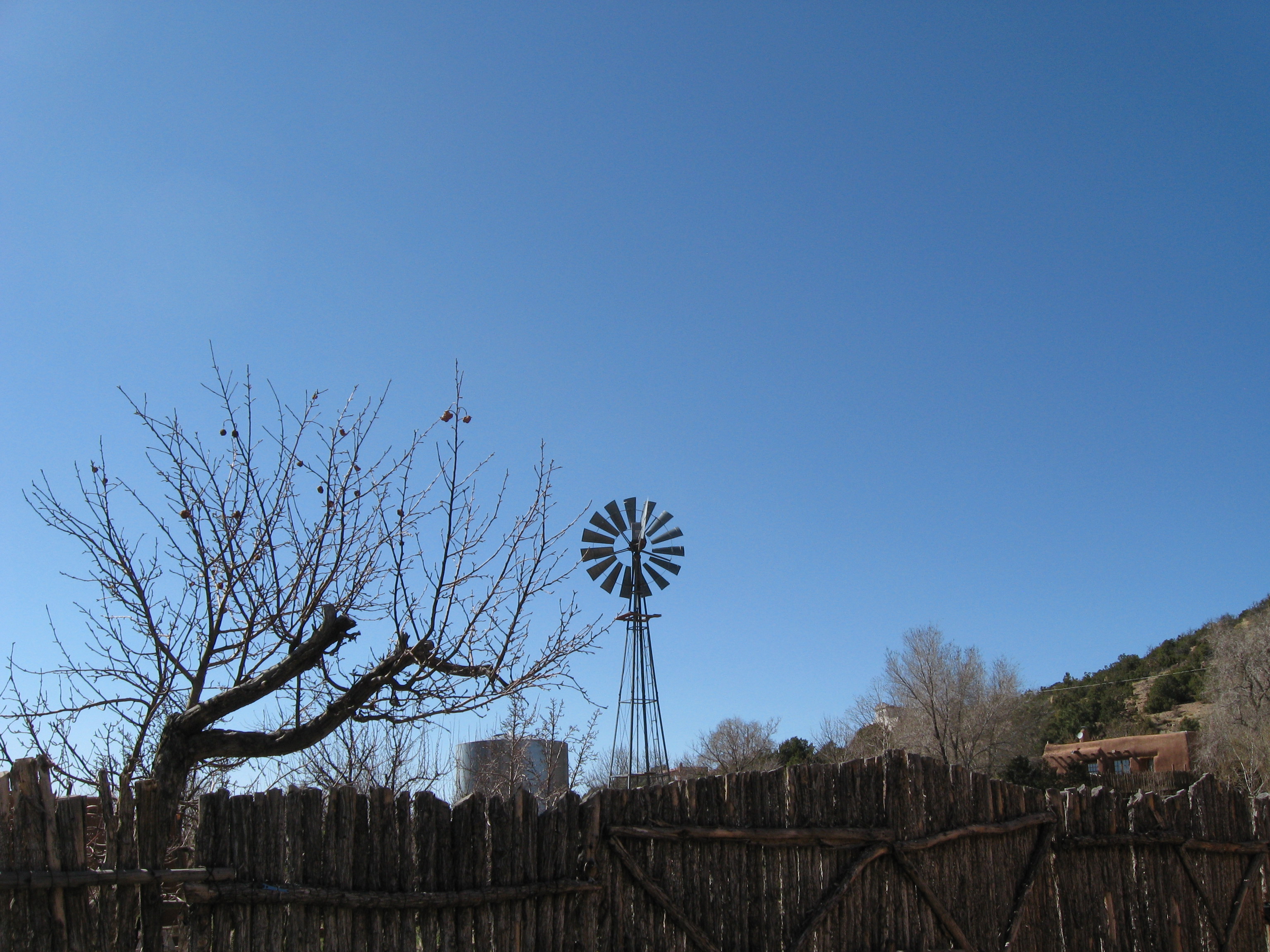
November sky over Upaya Zen Center, Santa Fe

I was thinking about what to write for a Thanksgiving post when this showed up in my in-box this morning from my friend Alan Senauke. So I happily give the floor to Alan, and wish all of you a happy holiday.


Thanksgiving For Real

Hozan Alan Senauke

11.25.10

When the Way is entrusted to the Way, we attain the Way…When treasures are entrusted to treasures, these treasures certainly become giving. We offer ourselves to ourselves, and we offer others to others.

—  Eihei Dogen, “Bodaisatta Shishobo”


Digging around a bit I find that the first “thanksgiving” in the so-called New World may have taken place in June of 1564 on the River of May (now St. Johns River, Florida), celebrated by French Huguenots who fled religious wars in Europe. Another thanksgiving was marked on September 8, 1595 in the Spanish colony of what is now St. Augustine, Florida.  By then the Spanish had massacred most of the early French colonists and many of the local native peoples.

In 1619 English settlers landed at Berkeley Hundreds on Virginia’s James River and offered a day of thanksgiving, as per a regulation in their charter.  Within several years, the ongoing Anglo-Powhaton wars had driven the native tribes out of the region, and left many of the early settlers dead.

The surviving fifty-three members of the Plymouth Colony celebrated their first successful harvest in New England with a day of thanks in November 1621. A larger group from the Wampanoag tribe, led by Massasoit, arrived uninvited at the festival, causing initial alarm.  But they came with generous offerings of food and drink (hence the now traditional Thanksgiving dinner of eel and stuffed lobster), and they partied together avidly. By 1676, only 400 Wampanoags remained and their leader Metacom, or King Philip, was captured and shot.  His severed head was displayed on a pike in Plymouth for twenty years.

By now you are surely wondering what does this have to do with Buddhism?  I am getting at the fact that our annual fourth Thursday in November tryptophan orgy, followed by Black Friday — the traditional kickoff to Christmas shopping — has a history marked by domination: domination over native peoples, domination over poultry — ask any turkey — and the domination of consumerism over all of us.

Still the force of giving and gratitude cannot be erased by history. It is a universal activity of the true human. Many of us will, in fact, experience just this as we sit down with family and friends on Thanksgiving Day. Or as we serve a meal to those in need. In Buddhist terms Dogen Zenji writes:

When we can give up even one speck of dust as the practice of giving, though it is a small act, we can quietly rejoice in it. This is because we have already correctly transmitted and carried out one of the virtues of the buddhas, and because we have practiced a bodhisattva’s act for the first time.

The Bodhisattva’s first perfection or paramita is dana, giving. There are many kinds of giving: material aid, spiritual comfort, the Buddha’s teachings, fearlessness, and more.  This is a universal principle. Judaism calls it tzedakah, in Islam it is sadaqah (clearly the same word), Christianity has caritas (Latin) and agape (Greek).  We can draw fine distinctions, but these are related practices — giving without the expectation of reward or recompense.

In his inspiring book The Gift, writer Lewis Hyde says:

Between the time a gift comes to us and the time we pass it along, we suffer gratitude… Passing the gift along is the act of gratitude that finishes the labor. The transformation is not accomplished until we have the power to give the gift on our own terms.

This is a curious expression, to “suffer gratitude.”  The Latin roots of “suffer” imply to carry up or to bear from under. In earlier days it meant to allow something to arise. At the same time, the word suffer inevitably suggests our experience of the pain of life, the mark of our precious human existence.

This awareness undercuts the theme of domination running through the history of thanksgiving as a holiday. When we suffer gratitude there is no room for domination. When giving and gift circulate freely we have moved beyond the realm of subject and object.  Giving gives, receiving gives, suffering disperses like morning mist in sunlight.

My own Zen teacher says, “Don’t treat anything as an object.”  This means to see all that we encounter — persons, material things, feelings, ideas, and so on — as part of oneself.  That is, subjectively.  With such an attitude, which is the mind of zazen, domination cannot emerge.  We meet the world with an open hand. We immediately know thanks in giving, thanks in receiving, thanks in being. And then we are in the next moment, where the hand is opened once more.  This is thanksgiving for real.

I give the last word to Dogen, again from “Bodaisatta Shishobo.”  Enjoy the day.

It is like offering treasures that are going to be discarded to people we do not know. Give flowers blooming on the distant mountains to the Tathagata. Offer treasures accumulated in our past lives to living beings. Whether a gift is Dharma or material objects, each gift is truly endowed with the virtue of offering.



Quote of the Week: Aung San Suu Kyi

Posted on

The release of Daw Aung San Suu Kyi continues to be the biggest story on the socially engaged Buddhist front this past week. To really get a sense of how important this is, you need only take a look at the front page of the Irrawaddy news magazine, Burma’s independent media voice. Articles this week include “Grandmothers Who Help Suu Kyi,” coverage of Daw Suu’s first visit with her son in more than ten years, and this disturbing story about the junta’s attempts to evict more than 80 HIV/AIDS patients after Suu Kyi visited their shelter in Rangoon last week.

But perhaps best of all was this interview between Daw Suu and Irrawaddy editor Aung Zaw (thanks to Lynette Monteiro of 108 ZenBooks for telling me about this). In response to a question about the possibility that she might meet with General Than Shwe (the leader of Burma’s military junta), Daw Suu said,

I am not sure if you have heard that Gandhi was very fond of a Christian hymn, even though he was a follower of Hinduism. The name of the song is “Lead, Kindly Light.” It says, “I do not ask to see the distant scene; one step enough for me.” Gandhi believed that, and so do I. I will do my best to walk, step by step. If I am on the right track, I will reach the right place. I don’t want to try to imagine something very distant. For me, hope is the desire to try. I believe I can only hope for something if I have tried to achieve it. I will continue to make an effort with this belief in mind.