 Today’s quote, from Mushim Ikeda-Nash, really more of a short essay, comes with a call to action — and is very appropriate given that today is Labor Day.
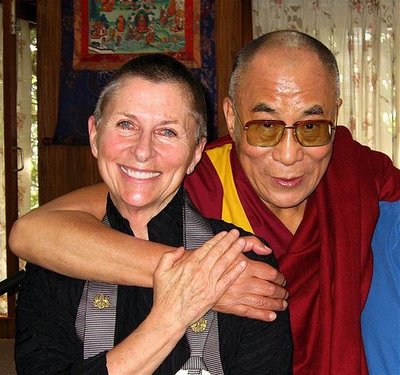
Mushim is a dharma teacher, diversity consultant, writer, and editor who lives in Oakland, CA. She is a core teacher at the East Bay Meditation Center (also in Oakland). For many years, Mushim wrote a “Family Practice” column in Turning Wheel that was one of the most beloved parts of the magazine. She has a gift for bringing the dharma into the every day details of our lives, whether that is being a parent or being an engaged citizen.
Mushim wrote this piece in 2006 for Interfaith Worker Justice. It’s titled “American Buddhists and Worker Justice: A Call to Action.”
“Aware of the suffering caused by exploitation, social injustice, stealing, and oppression, I vow to cultivate loving kindness and learn ways to work for the well-being of people, animals, plants, and minerals.”
~Thich Nhat HanhIn the richest country in the world, more than two million full-time, year round workers live below the poverty line, struggling to pay for necessities such as food, housing, healthcare, transportation, and childcare (U.S. Census Bureau, “Poverty in the United States: 2002”).
The Thich Nhat Hanh quote, above, is a contemporary interpretation of the traditional Buddhist precept, “Do not steal.” It calls upon us to deepen our investigation of what “stealing” is: we may not be robbing banks, or breaking and entering other people’s homes, but are we supporting exploitation of workers through the clothing, shoes, and food we buy? How far are we willing to go out of our usual comfort zones, how deeply are we willing to dig into our pockets, in order to support fair trade goods and worker justice?
How many Buddhist clergy and lay leaders turn up at worker strikes to show their support, in alliance with interfaith efforts? How many teachers giving Dharma talks or Buddhist sermons address the issues of living wage and worker rights? And if we ourselves are Buddhist and are laboring in exploitative workplaces, do we feel we can reach out to Buddhist coalitions for solidarity and support?
Buddhist teachings provide a “big picture view” spanning many generations, acknowledging that systemic greed, hatred, and delusion do not change overnight. When we examine the “ancient twisted karma” of innumerable human choices and actions, we can see that intertwined with the cause of worker justice in the United States is the plight of immigrants and undocumented workers, the “life threatening disease” of racism, and the breakdown of American public education.
We all need the basics: food, shelter, clothing, and medical care. Grinding poverty, for those who are working as hard as they can, leads to constant suffering and fear. As American Buddhists, we need to help ourselves and others realize the means to attain Right Livelihood, or non-harmful ways of making a decent living. Everyone, without exception, wants to live with dignity and safety, in happiness and in peace. When we help others, we help ourselves.
So, what can we do? Reflecting on our own actions, we can appreciate choices we’ve made in the past that support worker justice. When my son was seven years old, the Oakland public school teachers went on an extended strike. We never crossed the picket line, but I hadn’t been prepared to do home schooling, and my own work schedule was disrupted completely. I recall arriving at a local science museum one afternoon and finding a group of similarly desperate parents sitting outside, with screaming kids swarming over a large cement dinosaur. Greeting each other with exhausted nods, we sat together in silence. Convenient? No. Necessary? Yes! We supported the Oakland teachers’ union, and we made it through the strike, one day at a time.
Let’s take a vow today to take a step, small or large, for worker justice. Let’s think of one thing we can do, no matter how seemingly small, to help workers in our neighborhood, our schools, our community, earn a living wage and improve their situations. Working together, we can do it!
May all beings be happy.
May they be joyous and live in safety.




 The Jizo Chronicles