RSS Feed

Category Archives: Ruminations…

Micro Peacework

Posted on

This post originally appeared on Danny Fisher’s blog as part of the Buddhist Blog Swap a couple of weeks ago… including it here now for the archives.

We often think about activism and peacework in grand terms, even grandiose terms. We think it means we have to stop an entire war, save the planet from global warming, eliminate racism. Free Tibet, Save the Redwoods, End Poverty. That’s a big agenda. No wonder we’re exhausted.

Lately I’ve been thinking that two of the most common sources of violence are actually much closer to home, rooted in our own psyches. These are: 1) the tendency to hold tightly to fixed ideas, and 2) the compulsion to rush or speed in our lives.

I realize I’m not saying anything dramatically new here… teachers from the Buddha himself to Thich Nhat Hanh and His Holiness the Dalai Lama say this much better than I could. But it’s such a good teaching that it bears remembering, and we will never run out of chances to practice with these obstructions.

The first, holding tightly to fixed ideas, probably comes our way almost every waking moment. The second, the compulsion to rush or speed, causes harm in more ways than we are probably aware of. The movie “Changing Lanes” (2002, with Ben Affleck and Samuel Jackson) was a great parable on the karma generated by unwholesome actions that are so often fueled by speed. And recently, I posted a wonderful quote by Thomas Merton on that very topic on my blog.

What would it be like to consider that every moment, every interaction, is an opportunity for reversing the karma of those tendencies, and for potent peacemaking? And to consider that these apparently small actions can add up to make a significant difference in the world?

In that spirit, I offer this small, handcrafted batch of peacemaking for you to try, specially blended to work with these two obstructions:

  • Observe Shabbat, the Jewish practice of stopping on the seventh day, of being in stillness and rest. You don’t necessarily have to do it on Saturday, but try it for one day each week and see what happens.
  • Walk (or take the bus or the train) rather than drive your car. Notice how the pace of your life changes. What else happens?
  • Consider a long-held grievance you have against someone and, just for today, let it go. Grant emotional amnesty to that person.
  • Allow someone to cut in front of you in line without going into a hissy fit.
  • Watch yourself closely as you note ideas of scarcity of resources arising. Take a deep breath and practice trusting that there is enough for everyone, that all will be well.
  • Meditate. Meditation is the ultimate act of nonviolence. When you are sitting still, you are living in low impact on the world, and you are regulating your own mind and body to operate in a more sustainable way.

What would you add to this list?
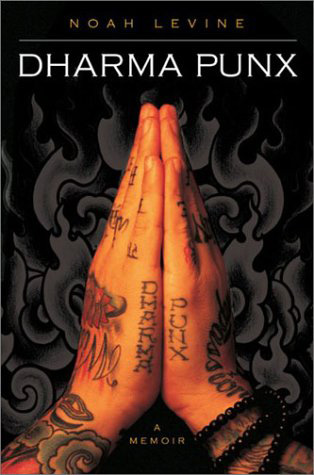
Dharma Punx Sensibility — What’s That?

Posted on

NOTE: I’m very happy to host this special guest post from Tanya McGinnity, as part of the Great Buddhist Blog Swap. Tanya is the author of the blog Full Contact Enlightenment… check it out! My part of the swap is to write something for Rev. Danny Fisher’s blog… should be posted later today or tomorrow. Enjoy…

Street Cred:
I’m feeling a bit like ‘Barbara Walters with a mohawk’ in writing this guest post on the Dharma Punx. I’m somewhat of a rubbernecker who is enthralled with them, yet hasn’t been much of an active participant in the organization. I do consider myself a ‘punk rock Buddhist’, someone who likes listening to loud, fast music and one who is political and activist minded but due my to following the beat of the Tibetan Buddhist drum, I’m not engaged in studies affiliated with their group. Yes. I do know that ‘punk’ is a labels, a concept, but the power and energy behind these labels in energizing and mobilizing young spiritual seekers has been valuable to the creation of a vibrant and active community dedicated to the preservation and spread of the dharma.

Dharma Punx / Against the Stream:
Dharma Punx is the title of a book published back in 2003 by Noah Levine (son of Stephen Levine) which documented his tough life as a drinking, drug-addicted punk rock jerk. After running out of stimulants and depressants and getting stuck in jail, Noah considered ending his life but turned towards meditation and healing as a means to pull himself out of this state of confusion and drama.

The book reads like the lives of many on the wrong path, but the ending is a happy one in that Noah turned things around, made peace with the ghosts of his past and decided to dedicate his life to helping and healing others.

As part of this service, Noah created the ‘Dharma Punx’ community to bring together those who either have walked a similar path of suffering or people who just appreciate punk music. He developed a series of teacher trainings to help cultivate facilitators in this Therevadan-oriented tradition and nationally groups have formed to sit, study and practice together.

Noah’s second book, “Against the Stream” was published in 2007 and is more of an instructive guide towards bringing Buddhism into daily life and has less of an autobiographical approach than his first book. This book spurred the development of the ‘Against the Stream Buddhist Meditation Society’ and the ‘Mind Body Awareness Project’ which are all committed to social action and activism in working with marginalized groups such at risk youth, the homeless and those who are incarcerated.

A great community of teachers motivated by the principles of socially engaged Buddhism has developed from these two organizations and super folks such as: Matthew Brensilver, Pablo Das, JoAnna Harper, Vinny Ferraro, Doug Achtert and Mary Stancavage all bring their specific flavour in delivering the Buddha’s teachings.

The punk rock koan – What is the sound of one tattooed hand clapping?
I’ve always been the quirky one in the meditation hall. Not coming from the traditional stream-enterer path of hippydom (sorry boomers), it was sometimes hard to find folks with the same interests as me and to connect on a level beyond that of a practitioner with sore sitting bones. Yes it may sound superficial or strange that being amongst a group that are looking to discover no-self, I’m bobbing around looking for other band shirt wearing selves like myself.  Maybe it’s going back to that high school desire to fit in, but hearing these shared stories from the dharma punx can give us ‘weirdo punx’ some sense of feeling that we’re not alone in our experiences. At a young age, it’s easy to want to be included in something and rather than go down a path of negativity, I’m happy that the option of finding a ‘dharma gang’ is available to those who seek it out.

New voices from young practitioners carry on the Buddha’s teachings and ensure the flourishing of the dharma here in the West. I’m so happy that this generation of Gen X Buddhists is unwilling to water down the original teachings of the Buddha and places importance as much on practicing on the cushion as that of being involved in working with the suffering of others.

Check it out for yourself:

A video interview with Noah Levine:

A treasure-trove of recorded teachings available via iTunes :

http://itunes.apple.com/us/podcast/against-the-stream/id313540278

Odds and Ends

Posted on

Graduation Day at Upaya Zen Center

Lots to catch you up on… I’ve been away for a while because I was occupied with Upaya Zen Center’s Buddhist Chaplaincy Program for an intense 10-day period. During this time, we graduated and ordained our very first group of chaplains: thirteen brave souls who started in the program in 2008 and successfully completed all requirements, including a thesis-equivalent final project. And we welcomed 24 new students into the program.

It’s really quite an amazing program – part seminary training in Buddhist teachings and practice, part professional training in chaplaincy and servant leadership, and part mystery school. As one person put it, the program becomes a kind of karmic accelerator for one’s life. I’m honored to work with Roshi Joan Halifax in leading and shaping the program… and this year, I am putting myself in the training as well.

I continue to be in the middle of a busy stretch of life work. But a number of great socially engaged Buddhist items have crossed my desk and I want to pass them along to you. Here’s the shorthand version:

• Hozan Alan Senauke, founder of the Clear View Project, recently returned from a trip to India where he spent time with the “untouchable” communities of Maharastra. You can read his account of it here: “Buddhism Among India’s Most Oppressed: Notes & Impressions.”

• Ouyporn Khuankaew, an amazing, dynamic activist from Thailand, has been right here in Santa Fe for the past few weeks and I’ve loved getting to know her better. Her center, The International Women’s Partnership for Peace and Justice, is offering an event called “Women Allies for Social Change: Exploring Buddhism and feminism for personal and social transformation” in Chiang Mai, Thailand, this July. I’ve added it to the SEB Calendar on this blog.

Also, Ouyporn, Roshi Joan Halifax, and I are cooking up an idea to create a version of the Upaya Buddhist Chaplaincy Program for Thailand. Stay tuned for more developments on this initiative.

• Another project I’ve been involved with is helping to collect material for the companion website to the upcoming PBS documentary “The Buddha.” The show will be aired on April 7. There are a number of good articles there on socially engaged Buddhism, as well as many other topics.

• Finally, there’s been a lot in the news lately about Burma and Thailand. If you’re trying to sort it all out and have a better understanding of what’s going on in that part of the world, Danny Fisher’s Buddhist Beat column on the Shambhala Sun website is a good place to start.

And in case you’re wondering, I really don’t care about all this Tiger Woods/Buddhist news… my only wish for him as well as for everyone else: May all beings be free from suffering.

Celebrating International Women’s Day

Posted on

Women in Bukavu, DRC -- photo by Paula Allen of V-Day

Monday, March 8, is International Women’s Day – a day to celebrate the economic, political and social achievements of women, and also to remember the suffering experienced by so many women and girls around the world.

Last week, I sat in the Upaya Zen Center zendo with about 50 other people as we listened, captivated, to Eve Ensler, creator of the Vagina Monologues and V-Day. You may not know this – Eve is a practicing Buddhist. She didn’t talk a lot about Buddhism explicitly, but everything she spoke about emanated dharma – realness, authenticity, deep compassion, healing and transformation, and activated practice.

By the end of the evening, I knew a lot more about the situation in the Democratic Republic of Congo (DRC), which has been the site of a horrific war for the past 12 years. During this time, nearly 5.4 million people have died and hundreds of thousands of women and girls have been raped and sexually tortured. It is one of the most dangerous places in the world for women.

Through the work of Eve and her colleague, Dr. Denis Mukwege, the suffering of these women is coming more into global awareness, and programs are being developed to support their leadership and to, as Eve says, “turn pain into power.” But in so many other places around the planet, women continue to be the targets of oppression and brutality.

So here are a few things you can do to mark International Women’s Day:

  • Nominate someone for the Women and Engaged Buddhism Award, to be presented at the May 1 conference. This award recognizes and encourages initiatives in Engaged Buddhism by women and is intended to nurture new or little-known projects that are underway at the time of the application. Application deadline is March 26.
  • Support Eve’s project, The City of Joy, which will be located in Bukavu, DRC, and will support and train women to be community activists. They will have access to services including education and income generating activities, as well as leadership training. They will also receive programming in: group therapy; storytelling; dance; theater; self-defense; comprehensive sexuality education (covering HIV/AIDS, family planning); ecology and horticulture; and economic empowerment.
  • Attend a showing of “Half the Sky,” a one-night event on March 4 inspired by stories from the New York Times bestseller “Half the Sky” by journalists Nicholas Kristof and Sheryl WuDunn about women and girls everywhere turning oppression into opportunity.

What are your thoughts on International Women’s Day?

On Respect and Love

Posted on

The other day I saw an email from Code Pink, addressed toward President Obama and outlining all the reasons for concern about his leadership on issues such as health care and the military.

I agreed with some of the points in the letter, not with others. But what really bothered me was that midway through the email, the salutation became simply “Obama.” As in, “Obama, I am losing hope… Obama, we need renewed leadership.” This struck me as plain rude. What happened to “President Obama”?

Call me silly, but I think this matters. When George W. Bush was president, even though I disagreed with nearly everything he did and everything his administration stood for, I always made a point of saying “President Bush.” (Even though it really stuck in my craw.)

I think it goes back to remembering something that Dr. Martin Luther King, Jr., said about loving your enemies. He actually said a lot about this — it was at the core of his preaching, and it was the fundamental basis of the Civil Rights Movement, as King interpreted it. He gave a whole sermon about it in 1957. Here’s what he says near the end of the sermon:


So this morning, as I look into your eyes, and into the eyes of all of my brothers in Alabama and all over America and over the world, I say to you, “I love you. I would rather die than hate you.” And I’m foolish enough to believe that through the power of this love somewhere, men of the most recalcitrant bent will be transformed. And then we will be in God’s kingdom. We will be able to matriculate into the university of eternal life because we had the power to love our enemies, to bless those persons that cursed us, to even decide to be good to those persons who hated us, and we even prayed for those persons who spitefully used us.

I realize this may seem like a trivial, but it feels like it points to something deeper. I’m curious — what do other people think/feel? Does this relate to your Buddhist practice in any way, or am I just way out on a limb here?

How My Practice Has Evolved

Posted on

Today is the great Buddhist Blog Swap, and the guest author here is Shane Hennesey of Zenfant’s Home for Dirty Dharma. My post is over at Home Brew Dharma, Adam Johnson’s blog. Thanks to Nate DeMontigny of Precious Metal for setting this all up!

*************

by Shane Hennesey

Meditation for me has been something I have pursued since the age of 13 (I’m 40 now…that’s 27 years for you math types). I guess being an only child and being introverted, it felt fairly normal and natural as a process. I spent a lot of time quietly engaging my imagination, so it was not a stretch to try and focus that sense of play into intentional mental activity.

That being said, the way I got into the use of meditation was out of desire. I grew up a fearful kid and I thought if I could know and see and use the invisible world, I would have an edge over the other kids. I was fascinated with witches, wizards, and fantasy settings and I wanted to do what they could and know what they knew.

At age 17, I made a vow to meditated twice a day for an entire year. I did it faithfully every morning after waking up and every night before bed, regardless of where I was or what was going on. It wasn’t always easy, but I did it. Meditation at this point in my life was all about the proper visualizations. If had the correct symbols and rituals, it would work, otherwise nothing. Practice was very structured with images and sometimes mantras.

Something shifted for me during that year of regular practice. I began to get a sense of something greater about me, my mind, and existence. I didn’t know what it was exactly or how to put it into words, but there was a seed beginning to sprout. I felt curiously calm almost all the time and I felt somehow in my skin but larger than that, connected and part of something ‘more’. The ‘more’ didn’t have a name or an identity to speak of, it just ‘was’.

I explored different practices on a search for something that resonated with me to a degree I could embrace it totally…Wicca, Shamanism, mystical Kabbalah…but nothing fit in its entirety. Growing up Catholic, I felt sure that I would eventually find a table to sit at and that every dish would be yummy and I would stay at that table. I learned how to meditate in ways that were structured or unstructured, silent or wrapped in drum beat, how to ascend thru the spheres of consciousness to reach the ultimate light (yeah never got that high up back then ).

I took these interests with me into my counseling practice. I learned shamanic hypnotherapy and became a Reiki practitioner. In fact, I think Reiki is what pushed me over the meditation edge. It was in that practice that I found how to get very quiet and get ‘myself’ out of the way so the energy could flow. I didn’t know it then but I was practicing zazen or silent illumination style mediation while I was doing Reiki sessions.

The seed that had been growing was coming into full force now. I was starting to get an understanding (experiential, not academic) of how we really are all made of the same thing and we all interpenetrate each other. This wasn’t just people, it was everything in existence. Quantum physics was showing it to us in other ways as well…we are all the same thing; we are all one entity, all one field of being.

Interestingly, I got really burned out about 5.5 years ago on my counseling career and anything that had to do with spiritual practice. I still don’t know exactly why, but I did, and I left it all behind. Curiously, or not so curiously, I also entered a negative relationship with an addict and pretty much shut down emotionally and spiritually for a few years.

I know this will be hard to believe, but the relationship blew up and after a while of feeling lost, the only place I had to go back to was my meditation practice…the only place that let me settle and find peace again. This time, however, I had been introduced to Buddhism and in my random readings and what not, I came across Brad Warner’s Hardcore Zen and it really snapped my head around. I’d say something poetic like ‘it resonated with me’, but fact it, it hit me like a fuckin ton of bricks and it was just what I needed.

So for the past 2.5 years I have been practicing zazen almost exclusively. I have been amazed at how zazen and the whole of Buddhism totally echoed the seed that had organically been growing inside me for all those years…years before I even knew what Buddhism was. How could I say no to that?

I have been more committed to my meditation practice than ever before in my life and consequently I have started hitting the formless states of mind on a regular basis. I’m still learning them, and I’m frequently NOT in them, but they are getting steadier and more regular. I’ve also plugged into the Dharma Punx as my sangha…they are the only ones who fit my renegade state of mind. I study Zen and Chan as well as sutras and modern teachings.  Though my meditation is always higher on the priority list than academic study. I am the kind of person who feels his way through a process as opposed to studying it to understand it.

It’s interesting to me that for all the years I spent doing visualization based meditations, or what I call ‘full’ or ‘busy’ meditations, that I should feel so very at home in empty meditations…or maybe it’s not interesting or curious at all, but quite the right place to be.

Beyond feeling that Zen is my current path, I don’t feel much strong connection to any other school of Buddhism. What I know for sure is that I’m in the right pool, so I’m gonna keep swimmin’ here.

Dark Times

Posted on

Moon over Santa Fe, NM

In just a couple of days, it will be the Winter Solstice – the longest night of the year. The other day, I was wondering what it must have been like to be one of the early humans, before there was a body of cultural and scientific knowledge built up to assure us that the light would, indeed, return as we turned the corner on this day and headed once again toward Spring. It must have been terrifying to see the sun drop lower and lower in the sky each day and the night grow longer and longer without really knowing if that trajectory would reverse.

So this is a dark time. And it feels like it, not only astronomically but also the world right now. Health care reform, at least in what I would consider any meaningful form, is for all purposes dead. It seems as though the insurance companies stand to gain the most if the current version of the Senate bill is to pass. The climate summit talks at Copenhagen have stumbled along, revealing just how much the richer nations of the world are determined to not step up to the plate and take needed actions to effectively address global warming. The economy is still in the toilet, and at least 15 million people are without jobs this holiday season (source: US Dept of Labor )

Fortunately, if you try to work with principles of socially engaged Buddhism, all this does not, necessarily, have to feel devastating. Even though it kind of is.

A number of years ago, I was the scribe at a meeting of representatives from Buddhist Peace Fellowship chapters from around the U.S. I took notes as they each described what kinds of actions and events they were organizing in their local chapters, and even more importantly, how they were doing these things.

A whole Mandala came out of this exercise that I’ll share in another post. For the moment, I just want to pull out the six qualities, informed by Buddhist practice, which emerged as ways that these folks perceived and practiced their activism in a unique way.

  1. Looking at an issue through the lens of dharma, questioning the notion of “self” in relation to activism
  2. Recognizing the truth of interconnection
  3. Offering a calming presence
  4. Having patience, being willing to slow down, recognizing the long arc of change
  5. “Being with not knowing,” non-attachment to views and goals
  6. Infusing our activism with bodhicitta, joy

Right now, those last three qualities might be especially helpful for us to remember. I don’t intend to be Pollyanna here, and breathing and smiling will not make the bad situations go away. But to truly be of use and to be effective as we try to nourish a more just and sustainable world, it can be helpful to ground ourselves in these principles. And remember that light and dark are always part of each other.

In the light there is darkness,
but don’t take it as darkness;
In the dark there is light,
but don’t see it as light.
Light and dark oppose one another
like the front and back foot in walking.

~From the Sandokai (Harmony of Difference and Sameness)

Warm Hand to Warm Hand

Posted on

Santa Fe Winter

Happy Bodhi Day to everyone!

Back online again after 7 days of keeping the computer off during Rohatsu. Okay, full disclosure: this was not Rohatsu sesshin the way you Zen folks know it. I did a modified home-based version of sesshin, in order to be more available to my doggie who had an operation the week before.

But I didn’t turn on the computer, didn’t drive the car, practiced zazen at home and sometimes next door at Upaya Zen Center, and helped make several meals in the Upaya kitchen for everyone who was sitting Rohatsu there. Last night, a snowstorm blanketed Santa Fe; it’s wonderful to wake up on the last morning of Rohatsu and see fresh snow everywhere.

Even doing Rohatsu this way, I could feel my practice settle into some deeper places, and was reminded of how spacious life can feel when ‘unplugged.’ I definitely have an addiction to information and knowledge (not the same thing as wisdom!), and this past week was a reminder that I can get seduced into thinking that I’m connecting and engaging with people through all my online activities. But there is a very different quality to connection and engagement when they happen warm hand to warm hand.

I’m no Luddite, and I appreciate the many ways that the Internet has expanded my web of connections and made me aware of what’s going on in many corners of the world and given opportunities to respond. Take, for example, the Saffron Revolution in Burma two years ago — something we only knew about because of the courageous people inside Burma who were able to get out photos and communications via the Internet.

But at the moment, I’m aware of how easy it is for me to get lulled into thinking of the Internet as my sole channel for activism, and how much more balanced and enriching it would be to get engaged more with local issues, with real live people, on a daily basis.

I’m curious how those of you who are online a lot find ways to balance this out in your lives…