RSS Feed

Author Archives: Maia

Happy Birthday, Daw Aung San Suu Kyi!

Posted on

Artwork by Shepard Fairey

Daw Aung San Suu Kyi is 66 years old today. My guess is that the way she’d like us to celebrate is by renewing our commitment to democracy and human rights for all the citizens of Burma. You can find out more about how to do that at the Clear View Project and the Campaign for Burma.

Here is a quote from Aung San Suu Kyi (from “Please Use Your Liberty to Promote Ours,” published in the International Herald Tribune, 1997):

Those of us who decided to work for democracy in Burma made our choice in the conviction that the danger of standing up for basic human rights in a repressive society was preferable to the safety of a quiescent life in servitude.

Ours is a nonviolent movement that depends on faith in the human predilection for fair play and compassion.

Some would insist that man is primarily an economic animal interested only in his material well-being. This is too narrow a view of a species which has produced numberless brave men and women who are prepared to undergo relentless persecution to uphold deeply held beliefs and principles. It is my pride and inspiration that such men and women exist in my country today.

The Dalai Lama Visits DC; Sakyadhita Conference Updates

Posted on

This is evolving into our mid-week miscellaneous news post!

Two important items of note this week:

1) His Holiness the Dalai Lama will be giving a free public talk in Washington, DC, on Saturday, July 9th. His talk is part of a historic “World Peace Event” at the U.S. Capitol (West Lawn) which begins at 9:30 am that day. For more information, visit this website.

2) The 12th Sakhyadhita International Biennial Conference on Buddhist Women is happening right now in Thailand.  The theme this year is “Leading to Liberation,” and you can keep up with the happenings at the event on this official blog (there are some nice videos and photos there as well). There are also more updates and livestreaming on this Facebook Page.

Quote of the Week: Rev. Ryumon HG Baldoquin

Posted on

I’ve been reading accounts from the Buddhist teachers’ gathering at the Garrison Institute this past week, and something that stood out to me was that there was only one teacher of Latino heritage present – my dharma brother, Shinzan Palma, a priest at Upaya Zen Center where I practice.

And I was reminded of an issue of Turning Wheel magazine that I worked on a long time ago. In the Spring of 2001, the theme we focused on was Buddhism en Las Americas… bringing forward voices of Latino/a dharma teachers and practitioners.

One of those voices was from Rev. Ryumon HG Baldoquín, a Soto Zen priest and teacher in the lineage of Shunryu Suzuki Roshi. Ryumon, who was born in Cuba, has been instrumental in the founding of People of Color and LGBTQ Sanghas across the U.S., and has served as a mentor and coach for young social change activists, political organizers, and emerging leaders. She is the editor of Dharma, Color, and Culture: New Voices in Western Buddhism. And though we haven’t connected for a long time, I’m honored to say that Ryumon is my friend (and former apartment-mate!).

Here is an excerpt from Ryumon’s story from that issue of Turning Wheel:

Part of my journey in Buddhism has been connected with my journey as an immigrant. I have always felt like an “outsider.” The experience of “looking in” and being “kept out” has been a great gift, for it has allowed me to learn how to move in and out of multiple worlds, even when I am not expected to exist in that world. The question of what an “outsider” is has been very central to my life, and has a lot to do with the work that I do.

The best way to describe this work is that it is about liberation. I assist individuals and groups to get in touch with the social hurts, personal wounds, and oppression that they have experienced, in order to generate options for moving to a healing place. Because after all, we can’t make change effectively in the world if we haven’t addressed our own healing process.

The Jizo Chronicles Switchboard

Posted on
Telephone operators, 1952

Flickr Creative Commons / Seattle Municipal Archives

I used to work on a switchboard like this in my college dorm, connecting calls with student rooms. This post is kind of like that… relaying announcements and messages that I’ve gotten via this blog recently:

  • From Ven. Bhikkhu Bodhi: “Please make it a point to come to Washington DC on October 6th. This is our chance to change the direction of this country, and thus the world. Especially our Buddhists: Exclusive ‘inner peace’ is no solution for a world burning with the fires of greed, violence, exploitation, poverty, and injustice. Put your peace and compassion into action and help uplift those who weep with misery and despair.”
  • From Jennifer of Nyingma Trust: “I am a volunteer for Tibetan Aid Project and Nyingma Trust in Berkeley, CA. Buddha’s Englightenment (Saga Dawa Duchen) on June 15th is coming up, and I’m trying to get the word out there for folks to send in prayer requests. All energy and intentions are magnified 10 million times during the Tibetan Saga Dawa, and we want to help others by praying for their intentions and needs. See:  http://nyingmatrust.org/NyingmaTrustWalks/trustWalk.html
  • P. Delaney of Dublin, Ireland, reports that Buddhist scholar and author Ken Jones will be featured at an event titled “What has Buddhism got to offer in relation to the global crisis of capital?” on June 24, as well as leading a workshop titled “Transforming self – transforming society” on June 25, both in Dublin. See the Calendar for more details.
  • Paul of Joplin, MO, left a comment on this post about ways to help in the aftermath of the tornado that hit that part of the U.S. last month. He writes: “I am a resident of Joplin. It would be great to talk with other Buddhists in the area but this is more bible country. Any suggestions? Anyone know of any Buddhist groups which may be in the area?” If you want to connect with Paul, leave a comment below and I’ll point him in your direction.

And finally, I am deeply grateful to everyone who responded to my last post, a letter inviting support for The Jizo Chronicles. I am very moved by your generosity, and I look forward to making a donation of 10% of those proceeds to the Cambodia AIDS Project, a very very worthy cause.

Letter to Jizo Chronicle Readers

Posted on

Alms Bowl/image from Wikipedia

Dear readers of The Jizo Chronicles,

As spring turns into summer (at least for those of us in the northern hemisphere), I want to thank you for your ongoing support. I’m grateful for the chance to connect with so many of you via this medium. There are many people doing bodhisattva work in the world, offering their practice and compassionate action to help alleviate suffering, and I am honored to feature some of their stories here.

I created The Jizo Chronicles a year and a half ago and continue to maintain it and the features here, such as the Calendar of Events, as a labor of love. This site is freely offered as a contribution to the socially engaged Buddhist community (and really to everyone who cares about people, the planet, and mindful/heartfelt social change) and I deeply appreciate your readership.

If you value the content on this blog and the effort I put into it, I’d be grateful if you would consider making a donation. This is the first time I’ve ever asked this, but there are a few expenses involved in maintaining a blog as well as the time that I invest in research and writing, and your support would help.

By making an offering, you have an opportunity to practice the paramita of dana and you get to support a sincere dharma practitioner, particularly as I focus on a student loan debt that I’d like to pay off before I reach 60! (Not an exaggeration–I’m 49 years old and have devoted my life to working in nonprofits, so it’s taking a long time to pay that loan off!)

In the spirit of paying it forward, for the month of June I will give 10% of whatever donations I receive to the good work of the Cambodia AIDS Project.

Here’s the virtual alms bowl, should you feel so inspired. And of course it’s fine if you don’t make a donation at this time… I am grateful to have each and every one of you as readers!

With much gratitude,

Maia

maia.duerr [at] gmail [dot] com

Quote of the Week: Wendy Johnson

Posted on

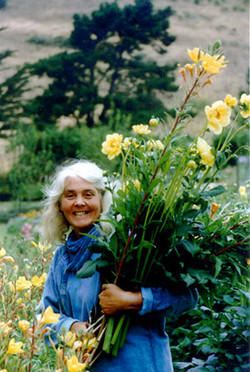
There are the headline stars of socially engaged Buddhism, like His Holiness the Dalai Lama and Ven. Thich Nhat Hanh. And then there are the lesser-known folks like Wendy Johnson who are beautiful, hidden gems.

I’ve been lucky enough to know Wendy for almost 15 years now and for the past three days, I’ve been enjoying being part of “True Nourishment from the Boundless Field,” a retreat with Wendy and Sensei Beate Stolte here at Upaya Zen Center in Santa Fe.

Wendy has been a Zen practitioner for 35 years in the lineage of Shunryu Suzuki Roshi. She helped to found the organic farm and gardening program at Green Gulch Zen Center in 1975, and she’s taught gardening and environmental education since the early 1980s. Joanna Macy once said, “If Earth took a human voice, it would be Wendy’s: wry, fierce, passionately attentive to detail, and so startling in its wild freedom it’s almost scary.”

This week’s quote is an excerpt from Wendy’s magical book Gardening at the Dragon’s Gate: At Work in the Wild and Cultivated World. You’ll notice the quote jumps from Wendy’s first gardening principle to her seventh… obviously there are five in between. Though I was tempted, including them all would have made this post way too long. So you’ll just have to get her book to find out the rest ; ) But this should be enough to give you a flavor of Wendy’s love for this earth.

Gardening is all about picking and choosing and following our passion. Some very basic principles inform how I garden. They come out of my love for gardening and for the world. Today I count seven principles. Tomorrow there may be eight or nine, because they arise out of an untamed rootstock from below the bottom of time.

My first principle is to learn gardening from the wilderness outside the garden gate…There is very little true wilderness remaining in the modern world. And yet when Thoreau says, “In wildness is the preservation of the world,” he reminds me that wildness, at least, persists. It endures underneath the paved-over pathways of our cities as well as on the fringe of urban farmland. It persists in patches, sumps, and wallows, in weedy tangles everywhere on Earth. Staying in relationship to the uncultivated world is a primary principle for me as I garden domesticated land….

My seventh principle is generosity with the harvest. In the biblical book of Leviticus, one of the laws of Jewish life was not to cut the corners of the fields after the main harvest but to leave them standing so there would be food to be gleaned by the hungry, the lonely, and the stranger. I treasure this old admonition to share the bounty of the garden harvest with all beings; it reminds me not to cut corners and to garden wholeheartedly for the benefit of both the visible and the invisible hungry world.

___________________________________

If you enjoyed this post, I invite you to visit my other website: The Liberated Life Project — a personal transformation blog with a social conscience.

10 Asian+Asian American Buddhists Who Make a Difference

Posted on

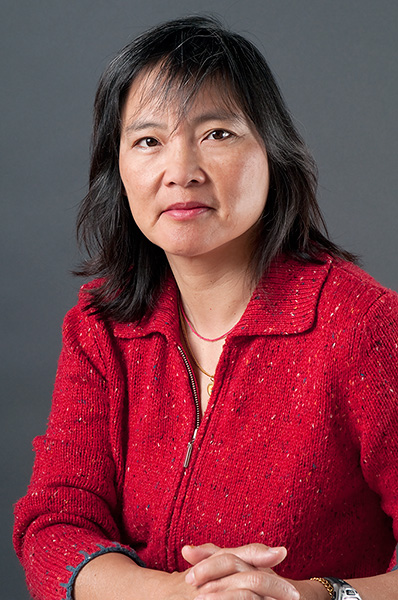
Canyon Sam

I’m taking this cue from Arun over on the blog Angry Asian Buddhist, which explores issues of race, culture, and privilege in American Buddhism.

As Arun notes in his May 23rd post, this is Asian Pacific American Heritage Month. He suggests: “…it would be great if the Buddhist blogging community took advantage of the eight remaining days in May to spend a little time—maybe just one post—recognizing the voices of Asian American Buddhists.”

I want to take Arun up on that invitation and highlight a few of the contributions of Buddhists of Asian and Asian American descent to the field of socially engaged Buddhism. Please note that the list includes people born in the U.S. as well as born in other countries… I couldn’t imagine a list about engaged Buddhism that left off folks like Kaz Tanahashi and Thich Nhat Hanh, so that’s why I expanded on Arun’s original suggestion.

This list is by no means exhaustive… I’m only touching on a few of the engaged Asian and Asian American Buddhists that I have known, worked with, and deeply appreciate.

Anchalee Kurutach was born and raised in Thailand but has lived in the U.S. since 1988.  She has been involved with refugee and immigrant work for over twenty years in both Asia and the U.S. Anchalee is very active in both the Buddhist Peace Fellowship as well as the International Network of Engaged Buddhists.

Anushka Fernandopulle, a dharma teacher in the Theravada tradition, is on the leadership sangha of the East Bay Meditation Center, in Oakland, CA. In addition to her past service as a board member for the Buddhist Peace Fellowship and her support for many other progressive organizations, Anushka brings a dharmic perspective to politics: she serves as a mayoral appointee to the San Francisco Citizen’s Committee on Community Development, a commission that advises the city on community development policy.

Canyon Sam  is a third generation Chinese American activist, author, and playright. She is the author of Sky Train: Tibetan Women On the Edge of History. After spending a year backpacking through China and Tibet when she was in her twenties, Canyon became very involved in advocating for Tibetan human rights and she helped to found the Tibetan Nuns Project.

Duncan Ryuken Williams, a Professor of Buddhist Studies at UC Berkeley, has written on Japanese Buddhist history, Buddhism and environmentalism, and American Buddhism. He is the author of several books, including Buddhism and Ecology: The Interconnection of Dharma and Deeds (Harvard, 1997).

Sister Jun Yasuda, whose picture graces the new masthead of the Jizo Chronicles, is part of the Nipponzan Myohji order. She has led and participated in peace walks to address issues such as nuclear disarmament, prison reform, and Native American rights for many years now. Sister Jun-san lives at the Grafton Peace Pagoda in upstate New York.

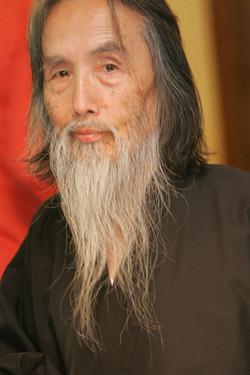
Kaz Tanahashi

Kaz Tanahashi, born in Japan, has lived in the U.S. since 1977. Besides being an artist, author, and translator (his recently updated translation of Dogen’s Shobogenzo was just published earlier this year), Kaz is very active in environmental and peace issues. He founded the organizations A World Without Armies and Plutonium Free Future (with Mayumi Oda).

Rev. Ken Tanaka  is a scholar and co-editor (with Charles Prebish) of the book The Faces of Buddhism in America. A leader in the Shin Buddhist community, Rev. Tanaka has called for the development of an “Engaged Pure Land Buddhism”

Mushim Ikeda-Nash  is a Buddhist teacher, author, diversity consultant, and community peace activist based in the San Francisco Bay Area. Mushim was coeditor of Making the Invisible Visible: Healing Racism in Our Buddhist Communities. Her work has been featured in two documentary films, “Between the Lines: Asian American Women Poets” and “Acting on Faith: Women and the New Religious Activism in America.

Ryo Imamura was politically active on the Vietnam War issue and farmworkers’ rights, and along with Robert Aitken Roshi helped to found the Buddhist Peace Fellowship in 1978. Ryo is currently a professor of East-West Psychology at Evergreen State College in Olympia, Washington.

Thich Nhat Hanh –  No list on engaged Buddhism would be complete without mention of Ven. Thich Nhat Hanh, who coined the term while he was still living in Vietnam during the war. Thay’s activism includes founding the School of Youth for Social Service (SYSS) in Vietnam, but probably his most important contribution to socially engaged Buddhism is his embodiment of what it means to “be peace” as a way of working toward peace.

Bodhisattva Action Alert: How to Help the People of Joplin, MO

Posted on

New York Times photo by Patrick Fallon

The photos show a devastating reality — last night, the tornado that hit Joplin, MO, was the deadliest one in the U.S. since 1953. In a city with a population of about 48,000, nearly 100 people are dead so far with many more injured.

I picked up the following information from this page on the MSNBC website… it seems to be the most comprehensive list so far on how to help:

Donations

  • The American Red Cross has set up a page for Missouri tornado and flood relief.
  • The Joplin Red Cross could use some donations. You can contact it at (417) 624-4411 or info@redcross-ozarks.org in order to find out what supplies are most necessary.
  • The Missouri SEMA has set up a donation page.
  • A list of major non-profits that operate regularly in Missouri can be found on the National Donations Management Network website. You can also call (800) 427-4626 for further information.
  • The Missouri Interfaith Disaster Response Organization is taking donations for longterm recovery efforts.
  • The Community Blood Center of the Ozarks is in need of blood — particularly type O. A list of donation sites can be found here.

Volunteering

  • 211 Missouri is helping organize volunteers in the affected areas. More information can be found by calling (800) 427-462.
  • Nurses or doctors looking to help can call (417) 832-9500 for the Greater Ozarks chapter of the Red Cross.
  • Health professionals can register to volunteer through the Show-Me Response website.

Animal rescue

  • For those in the Joplin area: Emergency Pet Center of the Four States at 7th & Illinois near the Sonic is OPEN and accepting found/injured animals. Its phones are down at this time.
  • The “Animals Lost & Found from the Joplin, Mo tornado” Facebook page is tracking lost and found pets.

Safety Information

  • The National Americorp Volunteers are setting up a national hotline for residents to call to check on loved ones. The number is (417) 659-5464 and should be active later today.
  • The American Red Cross has set up a site on which you can check in, report on the safety of others, or look for information on loved ones.
  • The “Joplin people accounted for after the storm” Facebook page is helping people track loved ones who fell out of touch during the storm.
  • The St. John’s Health System has been updating its Facebook page regularly with information relevant to the aftermath of the storm.